
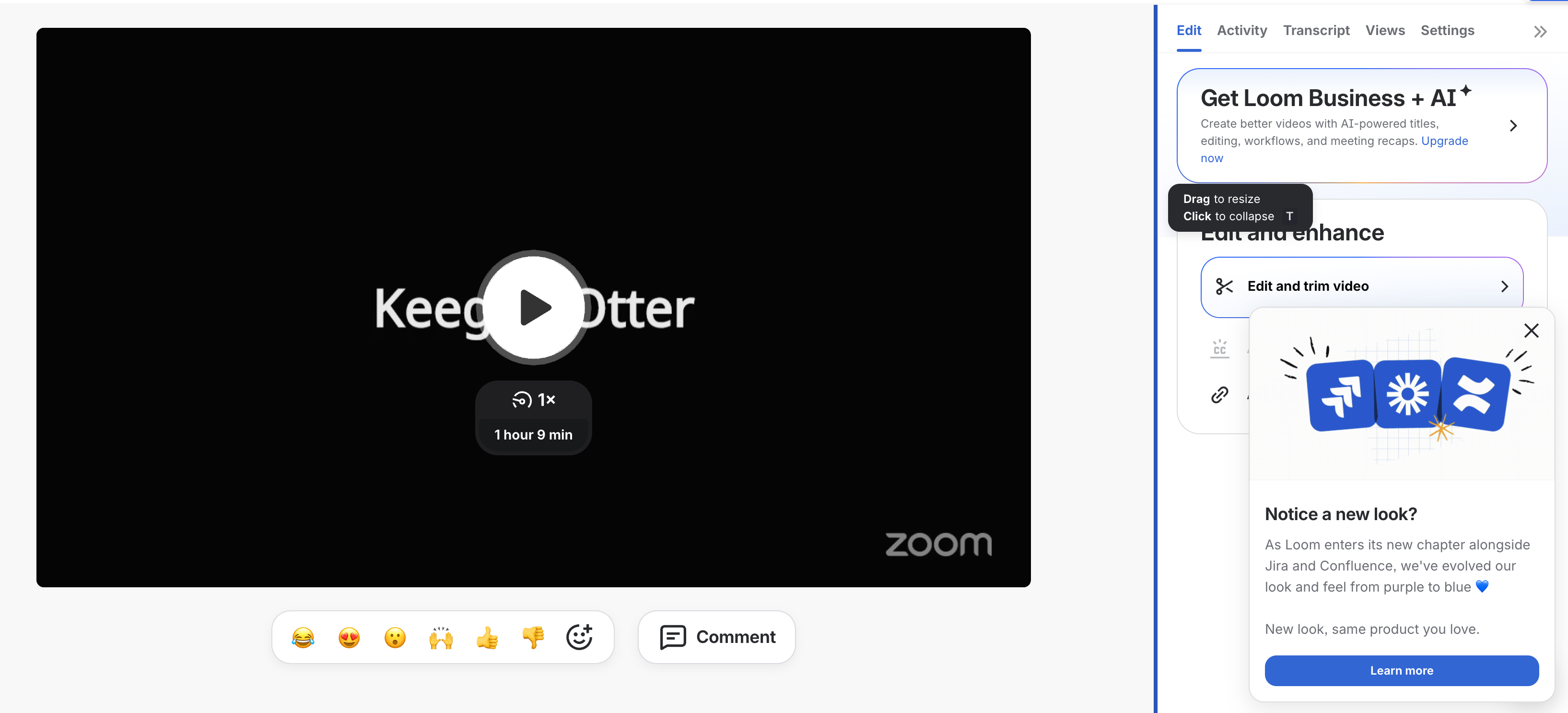
If you’ve opened Loom lately, you’ve probably noticed something new: subtle, in-product popups highlighting fresh updates, a new interface, or added features.
They’re not loud or intrusive. They feel natural, like a friendly teammate saying, “Hey, here’s what’s new.”
And that’s exactly why they work.
Popups have quietly become one of Loom’s most effective tools for guiding users through change, improving adoption, and keeping their community excited about what’s next.
Like most fast-moving SaaS companies, Loom ships updates constantly, new layouts, shortcuts, analytics, integrations.
But when your user base spans millions, it’s easy for those updates to go unnoticed.
Traditional methods, like email blasts or social posts, often get ignored.
What Loom figured out is that the best place to announce updates isn’t your inbox.
It’s inside your product, right where users experience those changes.
Instead of relying on static release notes or announcement banners, Loom uses in-app popups to deliver quick, relevant updates while users are already engaged.
These micro-messages appear contextually, a small tooltip introducing a new shortcut, a modal showcasing the refreshed dashboard, or a quick video explaining an update.
The result:
In other words, Loom treats its product as both a platform and a communication channel.
Popups appear at the perfect moment, when users are already interacting with the updated feature.
There’s no need to leave the product or check an email to understand what changed.
Loom’s tone stays conversational: “We’ve improved how you record. Want to see what’s new?”
It feels like help, not marketing.
Short animations and product screenshots help users immediately connect the update to what they see on-screen.
Because the messages are in-app, Loom can track how many users engage, click, or explore, and improve future rollouts based on data.
Loom’s strategy isn’t just for Loom.
Any SaaS company can use Upvert to communicate product changes in a similar way, without engineering work or complex setup.
With Upvert, you can:
Instead of hoping users read your email update, you meet them where they already are.
Loom’s in-app popups prove that users don’t just want new features, they want to understand them quickly.
The companies that win in 2025 will be the ones that communicate directly through their product, not around it.
If you’re rolling out new features or updates, don’t just announce them.
Show them, in context.
That’s what Upvert makes effortless, turning every product update into an opportunity to engage, educate, and excite your users.


.svg)